
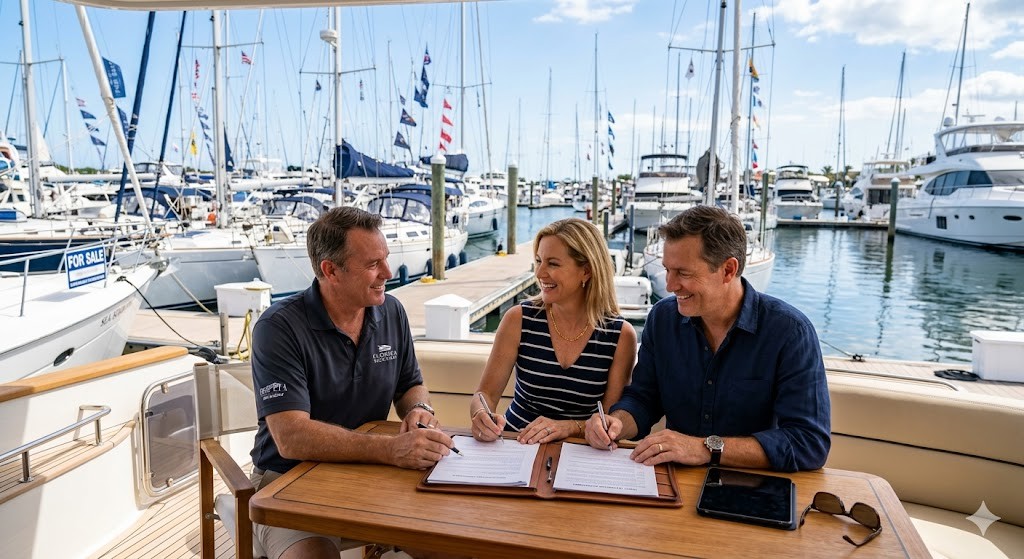
The Complete First-Time Yacht Buyer Guide for Florida
Buying your first yacht is one of the most exciting decisions you’ll ever make — and one of the most complex. As a first-time yacht buyer, you’re navigating a market full of jargon, variables, and potential pitfalls that experienced sailors navigate by feel. At Massey Yacht, we’ve guided hundreds of first-time buyers through the process over 46+ years in the Tampa Bay market. This guide covers everything you need to know before you sign on the dotted line.
Step 1: Define What You Actually Want to Do
The single biggest mistake first-time buyers make is starting with a boat in mind instead of a lifestyle in mind. Before you start looking at listings, ask yourself honestly:
- Will I sail mostly on Tampa Bay, or do I want to do coastal passages?
- Will I sail solo, as a couple, or with family and friends?
- Do I want to race, cruise, liveaboard, or all three?
- How many weekends per year will I realistically use this boat?
- Am I handy with mechanical and electrical systems, or will I need to rely on professionals?
Honest answers to these questions narrow down the field dramatically and help your broker point you toward the right boats — not just the shiny ones.
Step 2: Set a Realistic Budget (All-In)
Your yacht budget isn’t just the purchase price. It’s the total cost of ownership in the first year, which includes:
- Purchase price — usually 15-20% down if financing
- Survey and sea trial — $500–$1,500 depending on boat size
- Closing costs — title search, documentation fees, taxes
- Insurance — typically 1.5–2.5% of insured value annually
- Marina costs — slip fees, electricity, and services
- Initial outfitting — safety gear, dinghy, ground tackle, lines, fenders
- First-year maintenance reserve — budget 5-10% of boat value annually
For a first-time buyer looking at a $80,000 yacht, plan on having $110,000–$120,000 available to get properly set up in the first year. This isn’t meant to scare you — it’s meant to set you up for success rather than immediate financial stress.
Step 3: Work with an Experienced Yacht Broker
In real estate, buyers don’t pay broker commissions — the seller does. Yacht brokerage works the same way. Using a professional yacht broker costs you nothing as a buyer, but it gains you access to:
- Knowledge of which boats are actually good deals vs. overpriced problems
- Access to listings not publicly advertised
- Guidance through survey, sea trial, and negotiation
- Coordination with lenders, surveyors, and documentation agents
- Someone in your corner who’s done this many times before
Don’t buy a yacht without a broker — especially as a first-time buyer. The expertise is free to you, and the downside risk of a bad purchase is significant.
Step 4: Understand the Survey and Sea Trial Process
Every serious yacht purchase should include both a professional marine survey and a sea trial. Here’s what each involves:



The Marine Survey
A certified marine surveyor (NAMS or SAMS certified) will inspect the boat out of the water and in the water. They’ll check hull integrity, deck condition, standing and running rigging, all mechanical systems, electrical systems, safety equipment, and much more. The resulting report gives you a clear picture of the boat’s condition and any items that need attention.
The Sea Trial
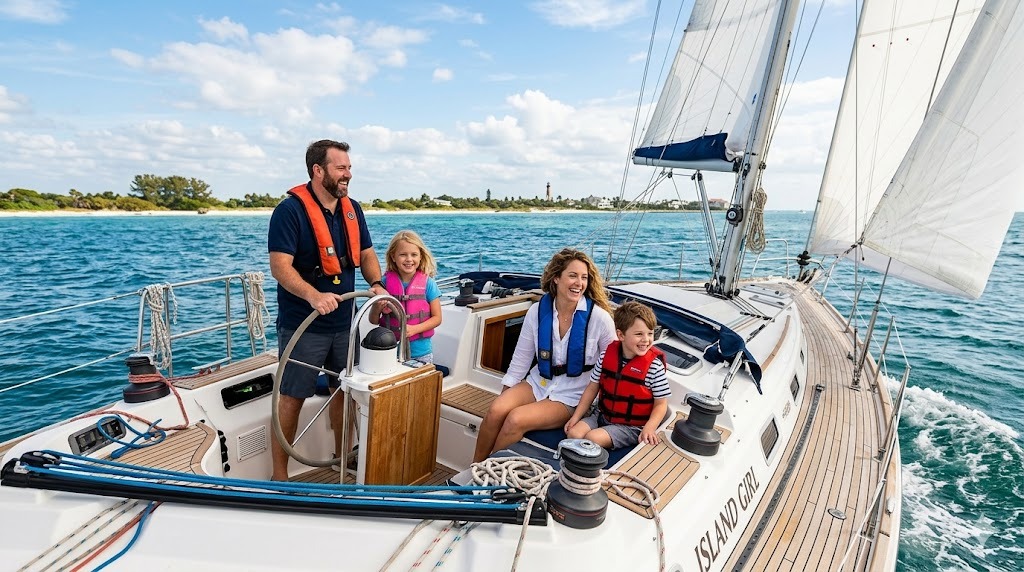
This is your chance to feel how the boat performs under sail and power. Does it track well? Does the engine run without overheating? Do all instruments work? Are there any alarming vibrations, leaks, or sounds? The sea trial is your final confirmation that the boat performs as described.
Survey findings often result in price renegotiation. This is completely normal and expected — it’s part of the process.
Step 5: Financing and Documentation
Yacht financing is available from several marine lenders and is often very competitive for well-qualified buyers. Terms of 10–20 years are common on boats over $25,000. Our team can help connect you with financing options that work for your situation.
Documentation is the other piece: most boats over 26 feet should be registered with the U.S. Coast Guard, and you’ll need clear title. Your broker will guide you through this process and help ensure there are no liens or title issues before closing.
What to Avoid as a First-Time Buyer
We see these mistakes often — and they’re avoidable with the right guidance:


- Falling in love with a project boat — Boats being sold “as-is” for low prices often have deferred maintenance that costs more to fix than the boat is worth. First-time buyers rarely have the skills or patience for extensive projects.
- Buying too small — The urge to start small is understandable, but boats under 28 feet are uncomfortable quickly in any chop, and you’ll upgrade within a year.
- Skipping the survey — Never, ever skip the survey to save money on a yacht purchase. The cost of a missed structural problem dwarfs the $800 you saved.
- Buying in a hurry — Great boats show up regularly. There’s almost never a reason to rush. If a seller is pressuring you to decide quickly, that’s a red flag.
Your First Yacht Awaits
The process can feel overwhelming from the outside, but with the right broker beside you, it becomes clear and manageable. At Massey Yacht, we genuinely love helping first-time buyers find their first boats. It’s one of the most rewarding parts of our work — watching the moment someone realizes this dream is actually within reach.
👉 Browse Sailboats Perfect for First-Time Buyers
👉 Talk to a Massey Yacht Broker — No Commitment Required
Your first yacht is out there. Let’s go find it.