
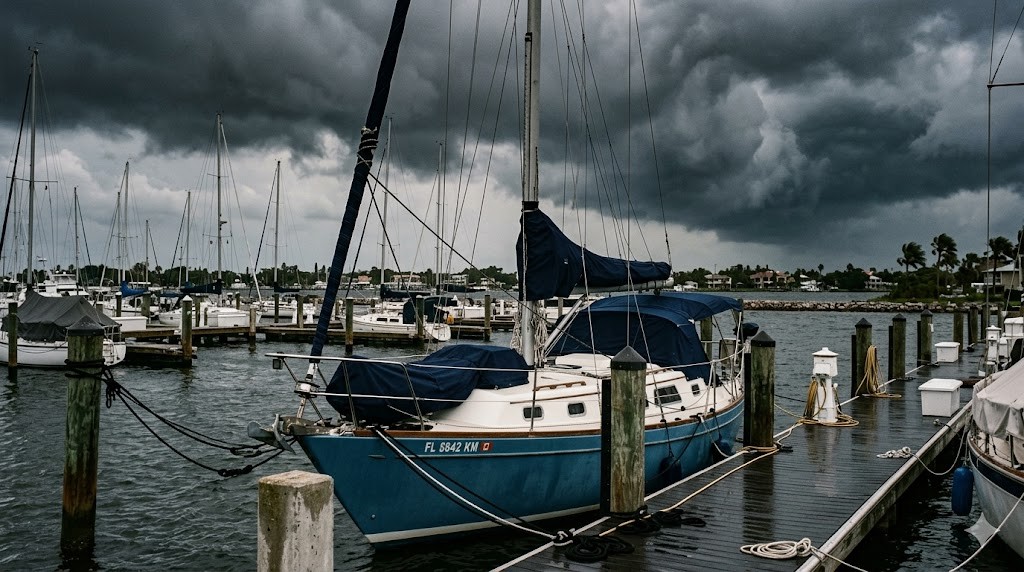
Hurricane Prep for Your Sailboat in Florida: What Every Owner Needs to Know
Every Florida yacht owner knows it: from June 1 through November 30, hurricane season is the backdrop to life on the water here. Hurricane prep for sailboats in Florida isn’t optional — it’s a fundamental responsibility of ownership. At Massey Yacht, we’ve watched storms come and go over 46+ years in Tampa Bay, and we’ve seen the difference between boats that survive hurricanes well and boats that don’t. That difference almost always comes down to preparation, planning, and decisions made well before the storm arrives.
Know Your Options Before the Season Starts
The time to think about hurricane prep is before hurricane season — not when a storm is three days out. Have a clear plan for your boat by June 1 each year. Your options generally fall into four categories:
1. Haul Out and Store Ashore
Storing your boat ashore in a designated hurricane storage facility is generally considered the safest option for smaller sailboats. Boats on the hard are not at risk from storm surge (if the facility is elevated) and don’t face the dock collision issues that can destroy boats in marinas. Most boatyards in the Tampa Bay area offer hurricane haul-out contracts — book early, as these fill up fast once a storm is named.
For larger boats, haul-out may not be practical, but if your boat is under 40 feet and your budget allows, this deserves serious consideration during direct-hit scenarios.
2. Designated Hurricane Holes
Florida has several well-known “hurricane holes” — protected anchorages with naturally sheltered water and good holding ground. In the Tampa Bay area, these include various canals, protected coves, and inland waterways. Research your local hurricane holes now, not during a storm watch. Understand depths, the holding ground (mud holds better than grass), and how much room is available for swinging on long scope.
3. Marina Preparation
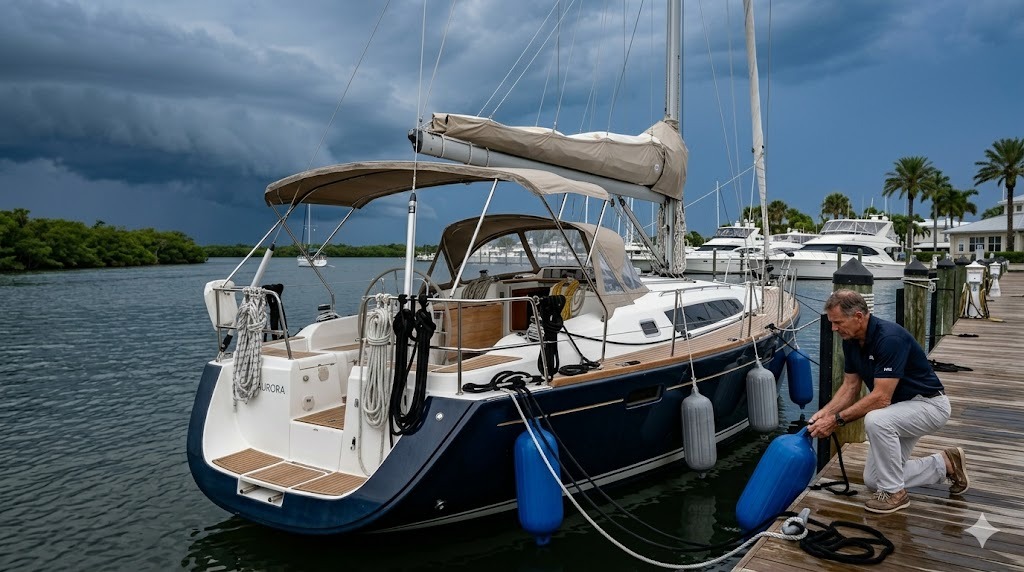
If you’re staying in your marina slip, preparation is extensive. This includes adding extra lines (every boat should have at minimum four dock lines in normal conditions — triple that for storm prep), removing all sails, dodgers, biminis, and any canvas that can catch wind, and adding chafe protection wherever lines contact dock cleats or boat hardware.
4. Offshore Sailing
For bluewater capable boats and experienced sailors, sailing offshore away from a storm’s track is a legitimate option — but only for those with real offshore experience and a well-equipped boat. This is not an option for the inexperienced, and the decision requires careful weather analysis and often a professional routing consultation.
Pre-Season Preparation Checklist
Every May, Florida yacht owners should run through this checklist:
Insurance Review
- Is your policy current and does it cover named storms?
- What are your hurricane storage requirements under the policy?
- Do you have an agreed value policy or an actual cash value policy?
- Is your coverage limit adequate for full replacement?
Ground Tackle Assessment
- Is your primary anchor appropriately sized for your boat in storm conditions? (Go two sizes up from standard recommendations for hurricanes)
- Do you have adequate anchor chain — 200+ feet for serious storm prep?
- Is your windlass reliable and does it have a manual backup?
- Do you have a secondary anchor and all-chain rode ready?
Storm Rigging
- Inspect standing rigging for any signs of wear, broken wires, or corrosion
- Verify all turnbuckles are properly pinned and taped
- Have a plan for how you’ll reduce wind resistance (remove sails, instruments, canvas)
When a Storm Is Named: 72-Hour Prep Protocol
When a storm enters the Gulf and threatens Tampa Bay, your 72-hour window is critical. Act early:
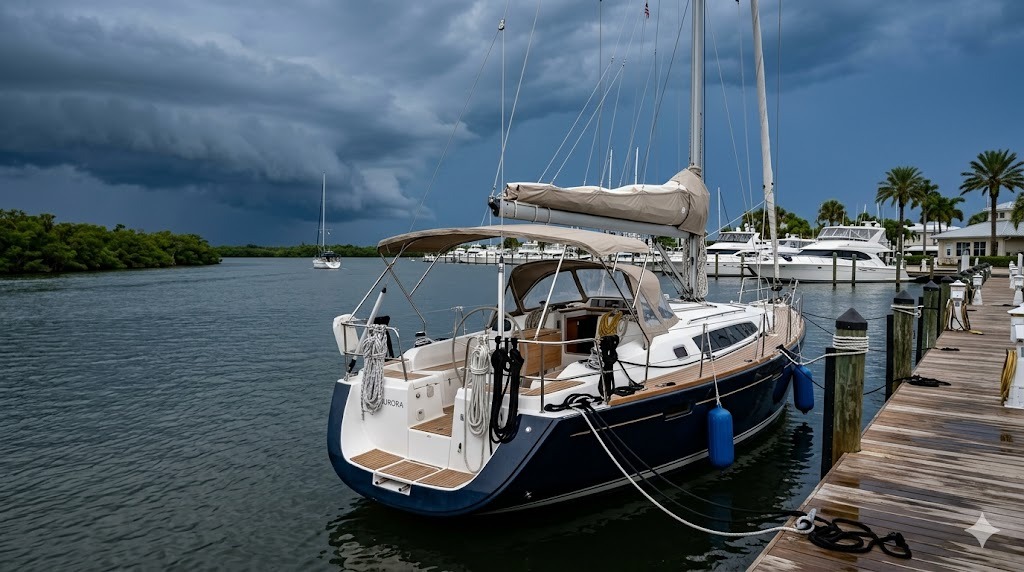




- 72 hours out: Execute your pre-planned storm prep. Don’t wait for mandatory evacuations to start moving your boat.
- 48 hours out: All canvas removed, extra lines doubled up, valves closed, bilge pump running, electronics and valuables removed from the boat.
- 24 hours out: Do not be on your boat. You should be off the water and safe before this point.
After the Storm: Damage Assessment
If your boat has been through a storm, document everything with photos before touching anything. Contact your insurance company before making repairs. Work with a qualified marine surveyor to assess any hidden damage — saltwater intrusion into electrical systems, stress cracks in fiberglass, and structural damage may not be immediately visible.




Protecting Your Investment Starts Before You Buy
The best hurricane protection strategy starts before you even purchase your boat — with proper insurance, the right marina choice, and a boat that’s built to a standard that gives you options in storm scenarios. If you’re shopping for a boat or looking to upgrade to a vessel better suited for Florida ownership year-round, our team can help.
👉 Browse Well-Found Sailboats Built for Florida Ownership
👉 Talk to Massey Yacht About Finding the Right Florida Boat
Florida sailing is worth every ounce of the preparation it requires. Stay safe, stay prepared, and keep sailing.